

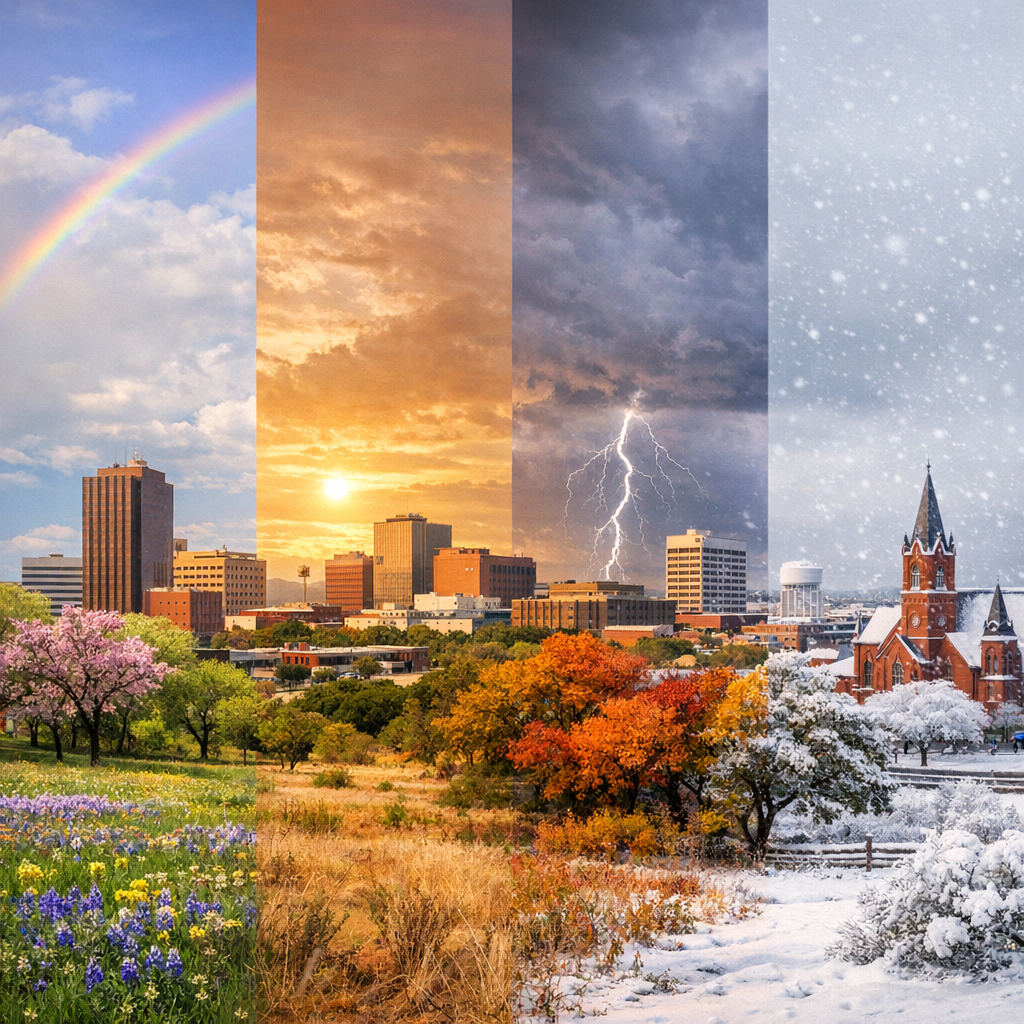
Abilene, Texas, experiences a humid subtropical climate characterized by hot summers and mild winters. Understanding these patterns can help residents and visitors prepare for the city’s weather throughout the year.
Temperature Trends
Throughout the year, temperatures in Abilene typically range from lows of 35°F to highs of 95°F. The hottest month is July, with average highs around 95°F, while January is the coldest, averaging lows near 35°F.
Precipitation Patterns
Abilene receives an average annual precipitation of approximately 26 inches. May and June are the wettest months, each averaging around 3.3 inches of rainfall, while January is the driest, with about 1 inch.
Seasonal Changes
The city experiences distinct seasons:
- Spring (March to May): Temperatures gradually warm, with average highs increasing from 69°F in March to 84°F in May. This period also sees increased rainfall, particularly in May.
- Summer (June to August): Hot and humid conditions prevail, with July and August averaging highs around 95°F.
- Fall (September to November): Temperatures begin to cool, with average highs decreasing from 87°F in September to 66°F in November. Rainfall remains moderate during this period.
- Winter (December to February): Mild and dry conditions dominate, with average lows around 35°F in January. Snowfall is rare but possible.
Environmental Considerations
Abilene’s climate influences various environmental factors:
- Stormwater Management: The city emphasizes preventing stormwater pollution by educating residents on proper disposal of household chemicals and yard waste.
- Environmental Health: Efforts are in place to control factors that may cause illness or discomfort, such as addressing public health concerns like broken sewer lines and stagnant water.
By understanding Abilene’s climate and environmental initiatives, residents can better prepare for seasonal changes and contribute to the city’s sustainability efforts.